Beauty in Imperfection

I’ve been thinking a lot, lately, about the concept of wabi-sabi.  It’s a Japanese term, and it describes the aesthetic beauty of the imperfect, the appeal the lonesome and the serene.  In fact, the term wabi-sabi is a combination of two terms – Wabi, an expression of remoteness, of humble simplicity; and Sabi, a word that denotes impermanence – the passage of time and the beauty in things that have weathered it.

Wabi-sabi is the comfort of well-worn boots and the tired gray of weathered wood.  It’s an old car in the driveway, or a walk in the woods.  It’s the feeling that fall brings, and the taste of a family recipe.  It’s what you mean when you say ‘home.’

Weathered wood & rusted hinge.

Wabi-sabi is not just an aesthetic but a concept.  In a sense, it’s an appreciation for things you know and love — good things, things that last long enough for you to nuzzle out their subtle idiosyncrasies, and love them for it.  I suppose you could call it ‘character.’

There is an antithesis to Wabi-sabi, but I don’t know if it has a name.  It’s the sleek symmetrical designs of today’s electronics, the utility of mass produced plastic Tupperware.  It’s the draw of the fresh, the new, the contemporary.  It’s new televised content every day, new fashion trends every season, new pictures on our Instagram feeds.  It’s consuming new things, rather than getting to know the old.

New phones.

The contrast is interesting.  Wabi-sabi describes well-made objects that age gracefully with time, objects whose use makes them valued heirlooms.  On the other side, there are plenty of objects, particularly in modern society, the use of which makes them gradually more worthless.   You would rarely find reason to buy a cell phone that is more than a few years old, but you might invest in good furniture, or a well-used cast-iron skillet.

I think we’ve seen a shift away from wabi-sabi, not just here in the United States, but worldwide.  The prevalence of the cheap and disposable makes many things easier, without a doubt.  Call it consumer culture, industrialization, or globalization, it’s a result of new technologies, capitalism, and market culture.  It shows the progress of human civilization, and we love it.

But when we turn on our televisions, we watch movies where we root for the underdog.  Our rebel faction, with tattered cloaks and outdated technology, fights against the sleek robotic agents of some futuristic utopia.  Sometimes, we watch movies in which modern civilization has collapsed altogether, our lonesome protagonist wandering through a remote and desolate landscape.

We set our desktop backgrounds to pictures of mountains and beaches and our favorite television shows are about small-town detectives.  City-dwellers wear flannel and grow beards and escape to rustic bars after work.  We spend our weekends camping outdoors, or driving lonely roads, or hiking overgrown trails.  Even as we consume the sleek and the new, we dream about the lonesome and serene.

computer nature

We may think we want this new world of big data, of smart phones and smart watches and rounded corners.  But, subconsciously, part of us yearns for the other, the wabi-sabi ideal.

Daisetz Suzuki, a prolific author who worked to translate the ideas of Zen, Bhuddism, and Shinto to the western world, once stated that wabi-sabi is ‘an active aesthetical appreciation for poverty.’  Not monetary poverty, but romantic – the simple life.

So what if we more fully embraced that wabi-sabi mindset?  What can we do?

I don’t think many of us can become lone wanderers or hermits.  We are still living in a society that practically demands us to hurry up, to sit down, to consume.  But there is always choice.

We can start treating things like they’re less disposable.  We can choose quality over quantity, and consume less instead of more.  We can act as stewards for our land.  We can plan for the future, not just today.  We can disregard the photoshopped, and embrace a diversity of beauty.  We can care for what we have, and be grateful for it.

The world is messy, uneven, old.   But it’s not hard to find comfort in her wrinkles.

Posted in Uncategorized | Leave a comment

America’s Largest Businesses Are Responding (Positively) to Climate Change

I wrote this as a writing sample for a fellowship application, thought I’d share it here. — Jon

In past years, discussion over climate change has almost always led to the same basic question: is it more important for us as a society to nurture economic growth, or protect the environment? But contained within this debate is an even more fundamental assumption. In the minds of many Americans, the two cannot exist concurrently. To attain one, we must sacrifice the other.

Survey polls as recent as this year, such as those from Gallup Inc., continue to perpetuate this belief through the very questions they ask. For example, survey takers are commonly only asked whether they tend to prioritize environmental protection or economic growth. While the answers to their questions do tell an interesting story about the state of polarity in American politics (by the way, “environmental protection” has actually surpassed “economic growth” (50% to 41%) for the first time since 2008, not counting directly after the BP oil spill), it fails to answer a simple question: do Americans think that both can exist together?

I may not have the statistics on this, but I’m willing to bet that American businesses are increasingly seeing that we can successfully marry business with environmental sustainability. A handful of smaller companies, such as Patagonia and other members of One Percent for the Planet, have always held this view. These companies tended to be small and privately owned, with flexible leadership.

But a recent report is beginning to show that many businesses, even publicly-traded corporations in the Fortune 500, are responding to calls (or pressure, if you prefer) for environmental sustainability. This 2014 report Power Forward 2.0 outlines some potentially game-changing results from these leading corporations, and how they are embracing sustainability initiatives while creating significant business value for themselves.

The report, a collaborative effort by the World Wildlife Fund, Ceres, Calvert Investments and David Gardiner & Associates, says that out of the five hundred Fortune 500 companies, 215 (43%) had set targets for improvement in one of three categories: greenhouse gas reduction, energy efficiency, and renewable energy. Even more impressively, the subset of largest companies, the Fortune 100, has led the way with 60% of them having set targets. Many of them are have met or even surpassed these targets.

Of these model Fortune 100 companies, savings through emissions reductions and renewable energy initiatives have been considerable, exceeding a total of $1 billion combined. Some of the top savers are PepsiCo, UPS, United Continental, and Cisco Systems, each with over $100 million saved. Dell reported saving over $1.1 billion, but that number was the sum result of billions of their customers enjoying reduced emissions from Dell products. So the figure might not make its way directly onto Dell’s operation sheets, but is significant nonetheless.

Through the setting and hitting of these targets, Fortune 100 companies have reduced their emissions by a whopping 58.3 million metric tons of CO2 equivalent. To put that into perspective, that’s about equal to retiring 15 coal plants, or taking 12 million cars off the road (based on EPA‘s online carbon calculator). And they’re saving money doing it! If these leading companies are tackling sustainability this well while reaping substantial benefits, think of the immense implications for the hundreds of other companies that will likely follow suit.

Of course, much more can – and needs – to be done across all sectors throughout the world (not just in the US) if we are to be successful in limiting global warming below the critical 2 degree Celsius threshold. However, the report gives clear and powerful indication that we are going in the right direction as a country, and that protection for our environment and economic growth can indeed exist harmoniously. If that’s not enough to convince you that times are changing for the better, consider the fact that as of January this year, Nevada State’s infamous “Welcome to Las Vegas” sign – symbol of human extravagance and overconsumption – is now completely powered by solar energy.

Posted in Energy, Human Impacts, Solutions | Leave a comment

Melting — by Cameron Gray

I am wandering. The San Diego Zoo is open late for the holidays. The air is chilly and quiet electricity colors the night. Christmas lights burn through the winter darkness, like constellations we pulled from the heavens. Did Icarus pluck stars from the sky before his fall?

A rhythmic dance between gravity, bone, and muscle moves my legs, carrying me down a steep hill. The sound of traffic washes over the city, thick and voluminous and expansive. Not unlike a warm and inuring blanket.

Tides of curiosity carry me forward. No maps in hand, no intentions held; just a black asphalt path hemmed in by the lanky silhouettes of eucalyptus trees, like thin masts that sway precariously in the breeze. My drifting lands me at the next exhibit, amid a large group of small children on tour with some of the zoo’s staff members.

Little faces, entranced and ecstatic, amass around an enclosure bathed in a soft cyan light. Some of their young bodies bounce in excitement. Others stand placidly, stilled by awe. Their wide eyes fixate on the polar bear resting at the front of the enclosure, right next to the window. Paws larger than their heads a foot away. A flood of low whispers and energetic shouts from the children coalesce into a chorus. Their fluid music inundates and overtakes everything, a claim to the exhausted inheritance ahead. How did we get here?

Occasionally lifting heavy eyelids, the polar bear looks like it’s in that place halfway between sleep and waking life. Albino white fur rises and falls with inhale and exhale. A majestic piece of predatory life an arm’s reach away, if not for the thick glass pane so fortunately placed between us. Those heavy eyelids slowly open again. The polar bear looks out tiredly to the mesmerized children, casting a soft and sentient gaze that invokes a question. Is this a dream?

An announcement is issued. Time to go. The children line up behind the two female staff members and step off into midnight. Standing in that ethereal blue illumination, alone except for the polar bear, a surreal thought is born. This young group of children belongs to the last generation that that will see one of these animals alive.

Like a life, the thought came and went. In the moment after its birth and death, I woke up.

Sirens punctuate the early morning air. From my bed, I listen as their sound dissolves in the dawn’s stillness, like ice melting in water. The silence that follows is a comforting lie.


About the contributing author:
In 2013, Cameron received a piece of paper that says he’s a Master of Environmental Science and Management. Cameron is interested in writing sentences that are not just read, but felt.

Posted in Uncategorized | Leave a comment

TED.

This three-letter word means different things to different people. For some, it’s a series of talks about all sorts of interesting topics. For others, its their favorite actor from the show Cheers. For those of us who have spent time in the Low Country, it can only mean one thing: safer shrimp fishing.

Fishermen and conservationists of the South East know this three-letter word as an acronym for Turtle Excluder Device.

Inserted into the nets that shrimpers drag behind those iconic vessels that populate the docks of the South, TEDs are metal grids that essentially deflect turtles out of the net through an opening in the mesh, allowing these protected animals to escape while retaining the valuable little crustaceans that we so love to eat.

While this method of protecting sea turtles from being unnecessarily killed by shrimp trawls is far from perfect, it is an example of the ingenuity applied to the fishing industry in an attempt to reduce impact.  It was not an easy journey for the implementation and widespread use of this strategy to reduce turtle deaths in this fishery, however.

In the face of strong opposition from shrimpers, conservationists launched their campaign in courtrooms and via the media, creating an air of distrust and animosity between players.

While TEDs have ultimately proven effective in reducing sea turtle bycatch, up to an estimated 97%, this case serves as an example of the importance of transparent and collaborative efforts between stakeholders.  Working together with resource users, conservationists are much more likely to see their objectives achieved in a much more timely fashion, allowing them to focus efforts on effective problem solving as opposed to waging unnecessary battles.

 Image

Posted in Uncategorized | Leave a comment

Just Eat What You Want

[Inside a restaurant, a group of friends is getting ready to order their food]

Waiter: ‘What can we get for you tonight?”

Dan: “I’ll have the prime rib, rare.”

Meggan: “Could I have the salad, dressing on the side?”

Kelsey: “I’ll try the angel hair pasta with ragu sauce.”

Michael: “May I have the American Burger, rare also?”

Taylor: “Could you tell me what kind of fish the ‘white fish’ is in the special for the day?”

Waiter: “I believe it’s halibut”

Taylor: “Do you know where it’s from, and how it was caught?”

[sighs and eye-rolling around the table]

Michael (under his breath): “Seriously?”

Taylor: “Guys, this is important!”

Waiter: “I’m not sure, but I can ask the chef…”

Taylor (as she pulls out her Seafood Watch app on her phone): “That would be great!”

[Waiter walks away]

Kelsey: “This is embarrassing.”

Taylor: “I’m sorry, I’m not going to eat fish that’s unsustainable!”

[silence]

Waiter: “So the chef thinks it’s from the Atlantic”

Taylor (checking her app): “I think I’ll pass…”

Kelsey: “Taylor, just eat what you want!”

– – – – –

For me, as someone who is immersed in fisheries science, I care about eating sustainably caught seafood. However, even armed with more knowledge about fish than most people, it can be anxiety inducing for me to order seafood in a restaurant or buy it in a grocery store.

I can imagine for people who aren’t talking about fisheries on a daily basis, that it’s even more overwhelming. Sometimes it’s simply easier to forgo asking questions. There are so many mixed messages flying around about seafood: what type is okay to eat, if it’s okay to eat seafood at all, whether farmed this is better than farmed that. I know I’m not the only one struggling to make informed decisions about seafood.

I get text messages about once a month from friends who are out at the grocery store asking me what kind of fish they should buy. I have friends who won’t order fish when we’re out because they’re worried they’ll slip up and upset me.

There is a great deal of work that needs to be done in our world’s fisheries to ensure the future health of the species we love to eat. A fear of demanding information just delays those improvements. Tools to guide responsible decisions about seafood consumption are available:

1 – Print or download the Seafood Watch pocket guide/app (it’s so easy to use!)

2 – Don’t contribute to stigmas against obtaining information about your food (terrestrial too!)

3 – When in doubt, choose something else

4 – Catch/harvest your own (with all the right permits of course!)

Posted in Consumer Choice, Human Impacts, Solutions | Tagged , , , , | Leave a comment

Deus ex Machina and the Final Frontier

I was introduced to Star Wars when I was seven years old. When the movie ended, I made a solemn vow to dedicate my young life to its study.  Star Wars plucked a chord that resonated through my childhood psyche in a way that Power Rangers and Looney Tunes could not.  Maybe it was the promise of mysteries hiding amidst the cosmos, an idea of exploring an unknown still full of danger and wonder.

Well, and there were robots, lightsabers and laser guns, of course. And spaceships: not just the Millennium Falcon; but the Serenity; the Enterprise; Battlestar Galactica.  In the realm of science fiction, the spaceships are the coolest part.

Lego spaceships are doubly cool.

Lego spaceships are doubly cool.

The starships of the future, we are assured by Lucas, Roddenberry, Scalzi, and countless others, can travel faster than the speed of light by way of tachyon manipulation or warp drives.  With the assistance of artificial gravity, the crews of these vessels dwell in spacious lodgings reminiscent of a cruise ship.  Matter rearrangers recycle the nutrients from waste into delicious food (or tea).  Teleporters allow the crew to visit nearby planets, providing they are hospitable to human life (which they usually are).

Because it’s science fiction, we are lead to believe that these technologies could be possible – magic and miraculous as the may seem, the concepts are (loosely) based on science.  That’s what is so entrancing about the genre: we want to believe that this sort of technology could exist, sometime in the future.  It’s this technology that allows mankind escape the confines of our planet and explore the far reaches of the galaxy.

It’s a vision that resonates, and not just with me.

NASA and the Colonization of Space

The mission to the moon captured the imagination of an entire generation, a cultural milestone for the entire human race.  The images from the Hubble Space Telescope have inspired and awed millions.

The Eagle Nebula, as captured by the Hubble Space Telescope

The Eagle Nebula, as captured by the Hubble Space Telescope

NASA continues to pioneer high-tech, spacefaring technologies – they’ve just sent a rover to Mars, and are completing the Hubble Telescope’s high-powered replacement.  There is already an International Space Station that supports extra-terrestrial life, and NASA is working on developing technologies that could allow humans to set up self-sufficient bases on other planets.  In Silicon Valley, NASA is building a “Sustainability Base,” a compound that generates all the power it needs to operate (via photovoltaics, wind, and geothermal energy), and utilizes 90% less water than comparable buildings.  The building itself learns to anticipate and react to changes in usage, sunlight, and temperature.  It’s the first step towards bases on another planet.

Architectural rendering of NASA's Sustainability Base.

Architectural rendering of NASA’s Sustainability Base.

This technology, for some, couldn’t come quickly enough.  Stephen Hawking argues that the only way humanity will survive is to establish bases on other planets within the next two hundred years.  He’s not alone: the need for humanity to find a new home in the stars is a motif well documented in science fiction.  In Elysium, the wealthiest people escape from a polluted and desolate earth, choosing instead to live on an orbital space station.  In Wall-E, mankind escapes the trashed and dying planet, living on a starship for so long that even plants are no longer recognizable.   In these stories, humanity survives, though the earth as we know it does not.  Space technology allows us to escape our otherwise unavoidable fate.  Deus ex machina.

Dues ex machina

Deus ex machina.  It’s a term for a plot device in which a seemingly insurmountable problem is miraculously resolved by the sudden appearance a workable solution.  In ancient Greek tragedies, this was often the appearance of a god being raised or lowered onto the stage by some contraption.  This god then rescues the protagonists of the story from their woes by some divine power.  Deus ex machina, literally, God from the machine.

Deus ex machina in Euripides' Medea, in which the sun god saves the day.

Deus ex machina in Euripides’ Medea, in which the sun god saves the day.

Stephen Hawking, NASA, and many others are counting on space technology as our deus ex machina – humanity’s miracle solution to the problems of environmental degradation, climate change, social turmoil, population pressure.  If we can develop the right technology, we don’t have to worry about solving these problems holistically – we can just escape earth entirely.

But science fiction is not reality.  As we all know, life rarely plays out like it does in stories.  Starships are not sleek and spacious.  Artificial gravity is a pipe dream, as are teleporters.  And there’s far fewer planets suitable for human life than the genre would lead us to believe: the closest planet with similar conditions is probably Gliese 667 Cc, at a distance of 22.7 light years away.  The journey there would take roughly 100,000 – 500,000 years, since faster than light travel is, for our intents, impossible.

As such, our space colonization prospects are confined to our solar system.  Mars may be a likely candidate, but setting up a sustainable base on Mars would be exceedingly difficult.  Replicating the conditions for life as we know it is hard.  The Biosphere 2 experiment demonstrated that a self-sufficient ecosystem that replicates the conditions on earth is costly, tenuous, and ripe for failure.

Here on earth, we take a lot of things for granted: gravity, air, water, light.  Synthetically reproducing the services that natural ecosystems provide is expensive, inefficient, and difficult. Earth is the perfect place for people to live: it would be a shame to ruin it.

It’s been a long time since I watched Star Wars.  I still like science fiction, and I’m still entranced by the cosmos, but I don’t pin my hopes for humanities’ future on the colonization of space.  All the world’s a stage, but when and if our salvation comes, I doubt it will be from a machine.

Earthrise

Posted in Human Impacts, Musings, Solutions | Tagged , , , , , , , , , , , , | Leave a comment

Lost and Found

We meet
people half way across
the world,
nowadays.

The plane carries us
like a mighty wind would
a floating seed

and ships cut miles in half.

We share and we give ourselves to these new places and people
and take what we are offered.

We eat asparagus in the winter,
and smell freesias in the fall.

This exchange, the transaction, of ourselves and this newness;
It is exciting.  It is scary.  It is unknown.

Like a cliff-dwelling pika meeting a mountain peak for the first time, retreating.

How warmth slices icebergs into cubes and
ring seals encounter gray seals
in a surprising reality.

There is a cultural exchange.  Swapping pasta for tacos, and embracing
the residual.
Perhaps rats will learn French when
they arrive on the boat from Portugal.

Nothing is normal anymore.

Posted in Musings, Uncategorized | Leave a comment

Cold War Consequences

Fukushima! Fueled by flashbacks of Cold War panic they blame it on Fukushima.

“The fish are radioactive! They can’t be eaten!  We’ll never have sushi again!”

“Whales are washing up on our beaches! They’ve been radiated to death!”

“Don’t visit California! The ocean will kill you!”

Blame it on Fukushima!

Now there is a new target for nuclear hysteria. California’s sea stars are dying. Dead. And in some places already gone.

There is of course a simple explanation.  This mass die off has happened several times before. But those lackluster headlines have long been forgotten. They don’t instill fear like the imminent possibility of nuclear fallout.  Memories of bomb shelters can’t be erased. Nuclear drills and radiation training films can’t be unremembered.

So, like the inedible fish, the beached whales, and the deadly Pacific, the dying sea stars are blamed on a fictive deadly radioactive plume. It’s Fukushima!

Those of us who aren’t the kids of the Cold War may prefer to remember the sexy spies of the age of espionage. We remember their music. We celebrate the man on the moon. We don’t talk about the nuclear horror. But maybe we should.

Maybe we should acknowledge that Fukushima finger pointing isn’t an act of ignorance. That blaming radiation isn’t crazy. It is learned — ingrained through years of waiting for a nuclear holocaust. Now, the radiation has arrived. And though its cause wasn’t war, the headlines went nuclear.

Nuclear fear can’t be unlearned, but new facts about radiation can be taught. It’s time to acknowledge the damage fear mongering headlines have caused. It’s time to re-teach the truth about Fukushima. With facts this time. Not fear. Then sea star wasting syndrome, which hit California in the 80s, then in the 90s, and again today can be understood for what it is. A virus. Not a nuclear event. 

leather_star

Posted in Wildlife | Tagged , , , | 1 Comment

Punxsutawney Phil, Eli the Ape, and the predictions that matter.

Punxsutawney Phil is our well-known weather forecasting groundhog (as is lesser-known ‘Staten Island Chuck,’ and a bunch of prophetic groundhogs from Jersey), who was awoken from his slumber Sunday morning to predict six more weeks of winter. Tens of thousands of people braved the bitter Pennsylvania cold to witness our favorite forecasting marmot deliver the news in person, with many, many more viewing from home.

According to Stormfax.com, Phil’s seasonal forecasting has been correct just 39 percent of the time since 1887. Despite his remarkable consistency in inaccuracy, Phil’s annual shadow detection is one of the most popular, accepted animal predictions in America. I get it, it’s an age old tradition that people celebrate year after year and I needn’t go into detail about why we might be more amenable to enduring another 6 weeks of winter when we’re informed by a cute animal (by way of his top-hatted handlers) than a real person. The acceptability of this event is not only big enough for an annual media frenzy, but to be placed squarely on our calendars every February.

This year, however, Groundhog Day was slightly overshadowed by another event – for the first time in history. Last Sunday, the Denver Broncos faced off against the Seattle Seahawks in Super Bowl XLVIII. Not obvious on the surface, these occasions may share more similarities than you think.

In addition to the endless coverage by news and sports broadcasting stations leading up to the game, Super Bowl viewers also turned to animals – a lot of them – in anticipation of their winning predictions. Here is a very condensed list of some of those predictions (and my opportunity to remind you that the Seattle Seahawks are Super Bowl CHAMPIONS, just in case you had somehow forgotten).

The brilliant animals that forecast a Seahawks victory included:

And the sorry saps that chose the Broncos included:

This short list is just a small sampling of the scores of Super Bowl animal predictions out there. Like Punxsutawney Phil, their accuracy is about as good (or worse) than your chances of flipping heads on a coin. Perhaps we only pay attention because it doesn’t really matter if the animals are right or wrong – there aren’t any actual implications to our future.  It’s just really fun.

Beyond folklore and traditions, sometimes (a lot of times) animals get it right. We see it every winter when the annual migration of whales signals the arrival of a new season, when grunions throw themselves on the beach to spawn right after a full moon, when birds seek the cover of their nests before a big storm, and when sharks head to deeper water just before a big hurricane arrives. These events are rarely publicized and scarcely acknowledged, at least in the American culture I’m familiar with.

Animals can provide insight into how the world works in other ways, too – and they are doing it more and more every day as our climate changes at increasing rates. Waterfowl changing their migration and breeding patterns, American Pikas seeking habitat in higher and higher elevations, penguins in Argentina suffering as much as polar bears in the Arctic. As our climate changes, the predictions animals give us are becoming more frequent, and with even greater implications on what our own future beholds. However, we continue to turn a blind eye to these forecasts and focus our attention on animal predictions with trivial consequences. Why is it that when the predictions matter, we refuse to listen?

*As a side note, along with Buffet, Pepper, Murphy and Diablo, NJ Governor Chris Christie also incorrectly chose the Denver Broncos to win the Super BowlIt would also appear as though he is still a little unsure about acknowledging climate change. Go figure.

Posted in Musings, Uncategorized, Wildlife | Leave a comment

What would it be like?

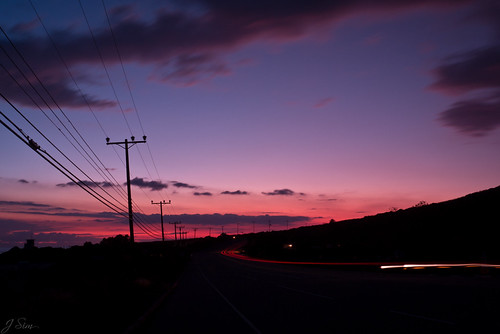
What would it be like to never notice the morning sun? The sun that floats above the ocean at daybreak. It sends out flowing rays of golden light across the water. It burns through the misty marine layer, lighting up the mountain range with watercolors as you drive dreary-eyed to work, sipping on your coffee.

Or never notice the saturated blueness of the sky? The sky that stretches far out to everywhere, and goes on until infinity. It glows and pulsates with boundless energy and prods playfully at your window while you’re inside, typing away at a computer screen.

What about the breeze that sweeps by in the afternoon? The breeze that rustles through the willows and shakes the tall grass at the little park across the street. It brings with it through the alleyways a collection of dried leaves, dandelion puffs, a few dollar bills, and a bright purple butterfly. You’re still inside, making important phone calls.

What would it be like to never notice the fiery brilliant clouds that appear at sunset? The clouds that seem to absorb the sun’s dying rays, and then explode into a million hues of reds and oranges. They linger spectacularly above you and fade quickly as you weave impatiently through traffic on the way home from work.

And the crescent moon that emerges from the darkening sky? The moon that glimmers softly like the silver centerpiece of an elegant tiara. It plays a soothing melody for all who listen. You’re at home, eating dinner in front of the television.

Or the meteor shower that blazes across the sky after midnight? The meteors that pelt against the black velvet sky over and over leaving ghostly streaks of orange and green. It whispers of secrets –  of the cosmos, the universe, and existence. You’re fast asleep in your bed by now, dreaming of a report you have to complete by next week.

What would it be like to never notice these things?

It happens all too easily. Life always threatens to get in the way, to keep us from noticing. It fills our head with worries, anxieties, burdens to keep our attention away.

But it doesn’t have to be this way. We can remember to look out the window more often. To roll down the window once in a while and feel the breeze. Take the long way home and watch the sun sink below the horizon.

Because – trust me – you’ll really want to notice.


Highway of Endless Dreams

Posted in Musings | Leave a comment

ABT it’s easy as 1-2-3

Image

Last week I was in Washington D.C. for a conference focusing on “Building Climate Solutions” and heard many prestigious speakers share their work and thoughts regarding solutions to climate change. Some were fantastic elegant speakers that kept me on the edge of my seat and focused on their presentation. Unfortunately, a few of the most prestigious scientists in the field with interesting findings to share were unable to hold the audience’s attention. They knew that speaking was not their strength; in fact they admitted this to the audience after the talk.

Ironically, at the very same conference, there was an expert on storytelling in the room who held a workshop earlier that day addressing the issue of scientific communication. Randy Olson is his name and he preaches the concept of ABT – and, but, therefore.

ABT, as he described, is a narrative structure based on the art of storytelling. The premise is simple — stories start with an exposition, describing the scene and stating facts; but is used to create tension and conflict to pique the audience’s interest; and lastly, therefore leads to the story’s conclusion and the main intent of the communication.

For example: Science is often complex, and scientists make a living investigating these details to gain a better understanding of their field or specific problem, but they often have a hard time communicating their results to the public and therefore, all too often their work goes unnoticed or not fully comprehended.

ABT is simple, easy to adopt and a powerful communication tool to turn complex scientific studies into a story that all can understand.

Give it a try!

Posted in Environmental Communication, Musings, Solutions | Tagged , , , | 1 Comment

Cycles of Moonlight

-moon-a

The moon, a bright beacon in the night sky, inhabits a place in both our folklore and scientific reality. It is foreign, mysterious and fickle. It arrives some nights warm on the horizon, a harvest moon of orange and amber. While other nights it is a slice of dim white far away in the distance. For much of human history we have cowered in fear or stared in awe at the moon.

In Ancient Greece, Aristotle postulated that the moon was the boundary between the mutable elements of earth and the immortal universe—the stars of aether. For medieval Europeans, the moon had such power that humans feared the transformation of man to werewolf at the sight of the full moon.

In our modern day mythology, science fiction, we concoct stories of wonder and sometimes horror that are located on the moon and other planets. The race to the moon fueled a technology race between two ideologically opposed countries, the U.S. and Soviet Union. As a result, we rocketed up to it, landed upon it and planted our flag in achievement. The moon has provided us with both the mystery and the satisfaction of knowing, and conquering.

The moon remains a force to be studied and understood. It determines ocean tides and cycles of fertility for some marine animals. Now, recent research shows that the moon has true power over us—in our sleep.

The study shows that melatonin levels, a natural hormone that promotes sleep, as well as our total sleep-time and deepest sleep are suppressed during the full moon cycle compared to cycles of waxing and waning. The people in the study slept poorly, overall, on nights near and during a full moon. Experts are perplexed. They have no scientific explanation for the participants’ poor sleep.

Perhaps we will eventually unravel all the mysteries of the moon and understand how it wields its influence. Until then, we can only ponder what the man in the moon intends for us each night.

The man in the moon,

Looked out of the moon,

Looked out of the moon and said,

“Tis time for all the children on earth,

To think about getting to bed.” – Mother Goose

Posted in Uncategorized | 2 Comments